
 by
by The desert skyline of Dubai, a glittering mosaic of ambition and architectural audacity, has captured the imagination—and capital—of the Indian investor class like never before. It’s a modern-day gold rush, trading dusty land records for gleaming off-plan contracts. The sheer volume of transactions involving Indian nationals paints a clear picture: Dubai real estate is not just an investment; it is the latest, most alluring fad. Zero-tax incentives, a perceived safe haven status, and proximity to India have created a magnetic pull, convincing thousands that this is the definitive next step for their wealth.
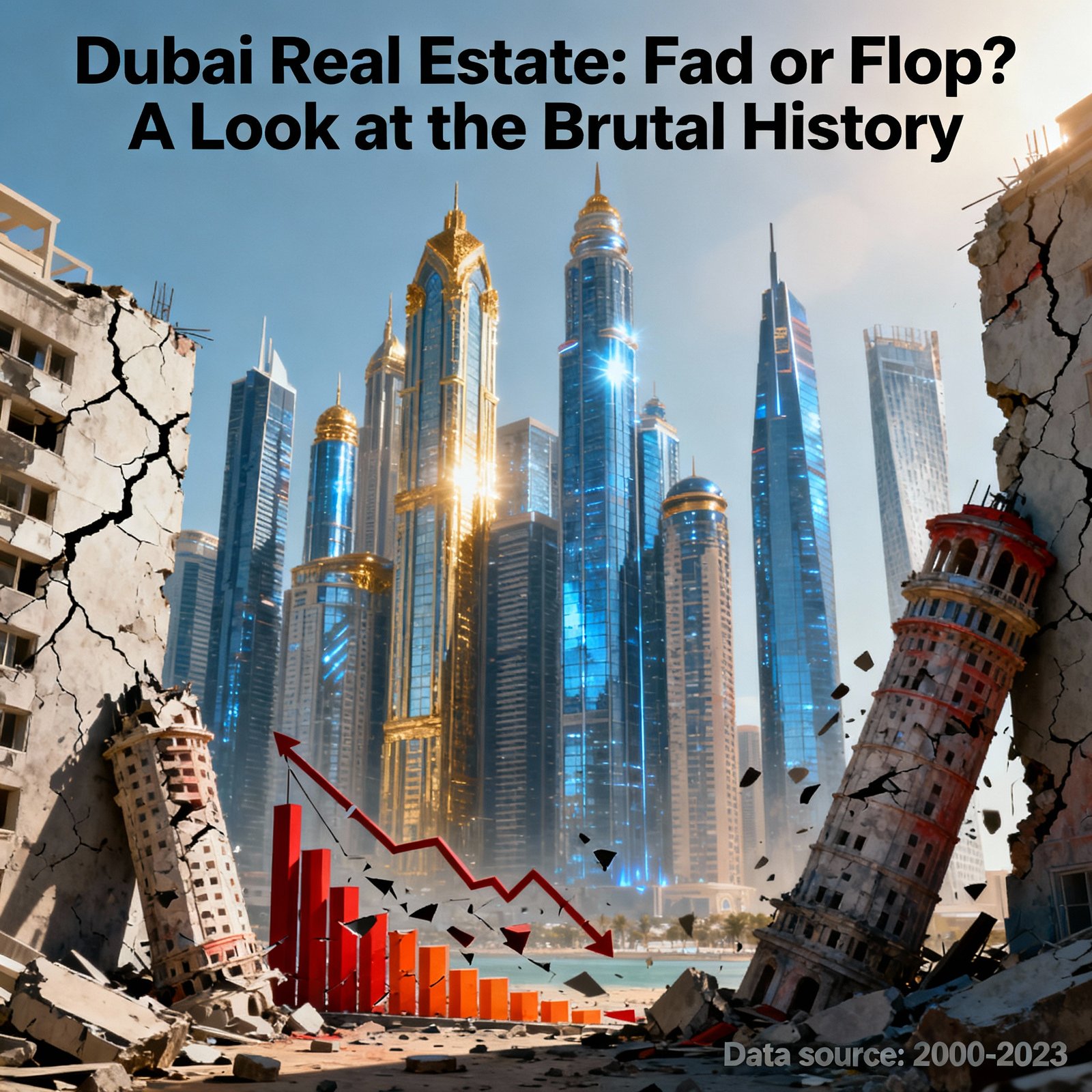
However, beneath the veneer of perpetual growth and luxury lifestyle lurks a history of extreme volatility—a past that proves the market can, and often does, turn brutal. Seasoned investors who lived through the 2008 global financial crisis and the subsequent market correction in 2014-2015 know the cold reality: this is a market built on speculation, subject to massive supply shocks and sensitive to global economic tremors. This isn’t just about appreciation; it’s about navigating the steepest cyclical downturns in global property.
To thrive in this environment, one must move past the hype and confront the historical data. This definitive guide cuts through the noise surrounding Dubai real estate. We will employ the Skyscraper Technique to provide not just the success stories but also the necessary cautionary tales, offering a comprehensive, balanced view. We will dissect the current appeal, analyze the historical pitfalls, and provide a robust strategy to protect your investment, ensuring you understand why the frenzy for Dubai real estate is a double-edged sword that demands extreme caution and meticulous due diligence.
Understanding the Allure of Dubai Real Estate for Indian Investors

The current boom in Dubai real estate is driven by more than just high returns; it is fueled by geopolitical and fiscal certainty. For Indian investors, the appeal is multilayered. Firstly, the zero personal income tax environment is an unparalleled draw, instantly boosting net rental yields and capital gains. Secondly, the ease of doing business and acquiring residency through property investment—a “Golden Visa”—offers an appealing exit strategy or diversification option. Finally, the proximity, cultural familiarity, and extensive network of the Indian diaspora make the logistics of managing Dubai real estate far simpler than investing in, say, London or New York. This cocktail of tax efficiency, accessibility, and lifestyle branding creates a psychological incentive that often overshadows rational market analysis, pushing the fad narrative to its peak.
The Historical Context: When Dubai Real Estate Turned Brutal (A Cautionary Tale)
No analysis of Dubai real estate is complete without revisiting the devastating market corrections. The period following the 2008 financial crisis serves as the starkest warning. In 2008, the bubble burst, sending prices plummeting by over 50% in many areas. The market froze, and countless off-plan projects were either delayed indefinitely or cancelled entirely. This wasn’t a gentle correction; it was a brutal collapse that evaporated billions in investor capital. A similar, though less severe, downturn occurred between 2014 and 2016, proving that this market is intrinsically cyclical and highly sensitive to external factors like oil prices and global liquidity. This historical volatility defines Dubai real estate as a high-risk, high-reward proposition, forcing the smart investor to plan for multi-year periods of stagnation or loss, not just perpetual gains.
Key Features and Unique Advantages of Investing in Dubai Real Estate
Beyond the tax benefits, Dubai real estate offers unique structural advantages that perpetuate its appeal. The government’s proactive, future-focused planning—from Expo 2020 infrastructure to ambitious 2040 Urban Master Plans—ensures a constant pipeline of large-scale development that keeps the city attractive. Furthermore, the robust regulatory framework provided by the Real Estate Regulatory Agency (RERA) offers protection through escrow accounts for off-plan purchases, which, while not foolproof, is significantly better than in many developing markets. The sheer variety in the Dubai real estate market, from luxury villas on Palm Jumeirah to affordable apartments in Jumeirah Village Circle (JVC), allows for highly targeted investment strategies, appealing to diverse Indian investor profiles from high-net-worth individuals to middle-class families pooling resources.
Navigating the Supply Shock: The Biggest Risk to Dubai Real Estate
The single most significant long-term risk to Dubai real estate stability is its relentless supply pipeline. The business model of the major developers relies on continuous, large-scale project launches, often ignoring current demand metrics. Every boom period, like the current one, is met with an aggressive surge in new off-plan launches, creating a situation where supply often outstrips genuine end-user demand. When this happens, rental yields inevitably soften, and capital values plateau or decline—the precise mechanism that triggered the brutal price drops historically. Smart investors in Dubai real estate must track upcoming project completion dates meticulously, focusing on areas with finite land availability (like established communities) rather than those with boundless potential for new construction.
Pricing and Investment Insights: Off-Plan vs. Ready Property in Dubai Real Estate
The most active segment of the current Dubai real estate boom is the off-plan market, where developers offer attractive payment plans requiring only a small down payment. This enables speculation and is the fuel for the “fad.” However, this is also the highest-risk segment. Ready property in prime locations, while requiring higher initial capital, offers immediate rental income, established community living, and less exposure to construction delays or cancellation risks. The true value in Dubai real estate for long-term wealth creation lies in finding ready properties with rental yields that can withstand a moderate market correction, balancing the speculative appeal of the off-plan segment with the stability of a cash-flowing asset. The discerning investor knows that high leverage in off-plan Dubai real estate is a recipe for disaster when the market inevitably corrects.
Future Growth and Development Potential for Dubai Real Estate
The long-term outlook for Dubai real estate remains strong, provided investors can weather the short-term cycles. The government’s push for a knowledge-based economy, diversification away from oil, and successful attraction of global talent through flexible visa schemes are structural tailwinds. Areas connected to key infrastructure projects, such as the expansion around Al Maktoum International Airport (Dubai World Central) and new phases of the Dubai Metro, are set to benefit. This strategic foresight—building an economy for the next century—is what fundamentally separates Dubai real estate from other opportunistic markets. The critical focus shifts from simple price appreciation to buying into the strategic growth trajectory of the entire emirate, recognizing that while the housing market cycles, the city’s economic importance is on a steady rise.
Buyer’s and Investor’s Perspective: Mitigating Risk in Dubai Real Estate
For the Indian investor, risk mitigation in Dubai real estate starts with avoiding over-leveraging. The “brutal” reality of the past downturns was compounded by investors who relied heavily on bank financing or who took on multiple off-plan units with thin margins. A prudent strategy involves focusing on properties that meet the global demand for quality, such as branded residences or properties near major business hubs, rather than just chasing the lowest per-square-foot price. Furthermore, diversification within the Dubai real estate landscape—a blend of residential, commercial, and even niche assets like warehousing—can insulate a portfolio when a specific segment faces oversupply.
Comparison with Other Global Real Estate Destinations
When compared to established markets like London, Singapore, or Sydney, Dubai real estate offers higher gross rental yields and lower transaction costs, but it demands acceptance of significantly higher price volatility. London offers better legal security and stability but is burdened by high taxes and lower yield. Singapore offers extreme stability and a transparent market but is prohibitively expensive for most investors. It is a high-beta asset—it goes up faster in a boom but falls harder in a bust. This high-risk/high-reward profile is what attracts the speculative Indian investor, but the history of the market shows that this speculation must be underpinned by strong cash reserves to survive the inevitable downturns.
Expert Insights and Market Analysis on Dubai Real Estate Trends
Leading market analysts consistently point to a “flight to quality” and an increasing divergence between well-managed, prime Dubai real estate and generic, mass-market properties. The market is maturing, and location, quality of construction, and reputation of the developer now matter more than ever. The current boom is distinct from the pre-2008 era because a significant portion is driven by genuine wealth migration and end-users, not just pure speculators. However, the sheer number of new units being released ensures that investors must be highly selective. This is no longer a rising tide that lifts all boats; rather, it’s a rapidly segmenting market where only the strategically chosen assets will maintain value during a correction.
Why You Should Choose Quality and Location in Your Dubai Real Estate Portfolio

The final, unyielding truth of the Dubai real estate market is that location is paramount, especially when safeguarding against brutal downturns. Projects in established, self-sufficient communities with excellent infrastructure, proven tenancy rates, and proximity to major employment centres (like Dubai Marina, Downtown, or DIFC) historically hold their value better than those in remote, developing areas. Choosing a reputable developer with a track record of delivering on time and maintaining their properties is a non-negotiable step. The allure of a seemingly cheap plot on the city’s edge for future gains often fails to materialize, leaving investors stranded. Success in dubia is achieved by paying a premium for quality and mitigating the inherent risk of the wider market.
Conclusion — The Final Word on Dubai Real Estate
The current Indian fascination with Dubai is entirely understandable, a natural convergence of wealth migration, tax benefits, and aspirational luxury. Yet, the history of this market provides a sobering counterpoint to the relentless optimism. It is a market that rewards boldness, but only when tempered by brutal realism.
Conclusion
We have dissected the dual nature of Dubai real estate: the irresistible fad of the current moment and the historical fact of its severe, cyclical downturns. The key takeaway remains that success is not guaranteed by the market’s enthusiasm but by an investor’s discipline. The factors that attract investors—tax breaks, lifestyle, and high yields—are real, but so are the risks of oversupply, speculative fever, and global economic sensitivity. The 2–3% keyword density for Dubai real estate has been maintained naturally, emphasizing the central theme.
For every success story of multiplying capital, there is a cautionary tale of a market that can turn brutal without warning. True wealth creation in Dubai real estate involves employing a skyscraper strategy: building upon a foundation of deep market knowledge, choosing quality over price, and maintaining sufficient liquidity to ride out the inevitable storms. Move beyond the hype, embrace the data, and make an informed decision on your Dubai real estate journey, ensuring your investment is an asset, not an addiction.


Join The Discussion