
 by
by The crisp morning air at 10,000 feet carries the rhythmic sound of temple bells along with the scent of wild pine. To your left, snow-capped Himalayan peaks reflect the first golden light of dawn; to your right, a glacial river carves its way through emerald valleys. This is not a scene from a fantasy novel—it is a typical morning in Uttarakhand, India’s cherished “Land of the Gods” (Devbhumi).
                 UTTARAKHAND TOURISM AT A GLANCE
┌───────────────────────────────────────────────────────────────┐
│  GARHWAL REGION               │  KUMAON REGION                │
├───────────────────────────────┼───────────────────────────────┤
│  • Char Dham Pilgrimage       │  • Nainital Lake District     │
│  • Rishikesh (Yoga Capital)   │  • Jim Corbett Wildlife       │
│  • Auli Ski Slopes            │  • Ranikhet & Binsar Quiet    │
│  • Valley of Flowers Trek     │  • Munsiyari Himalayan Views  │
└───────────────────────────────┴───────────────────────────────┘
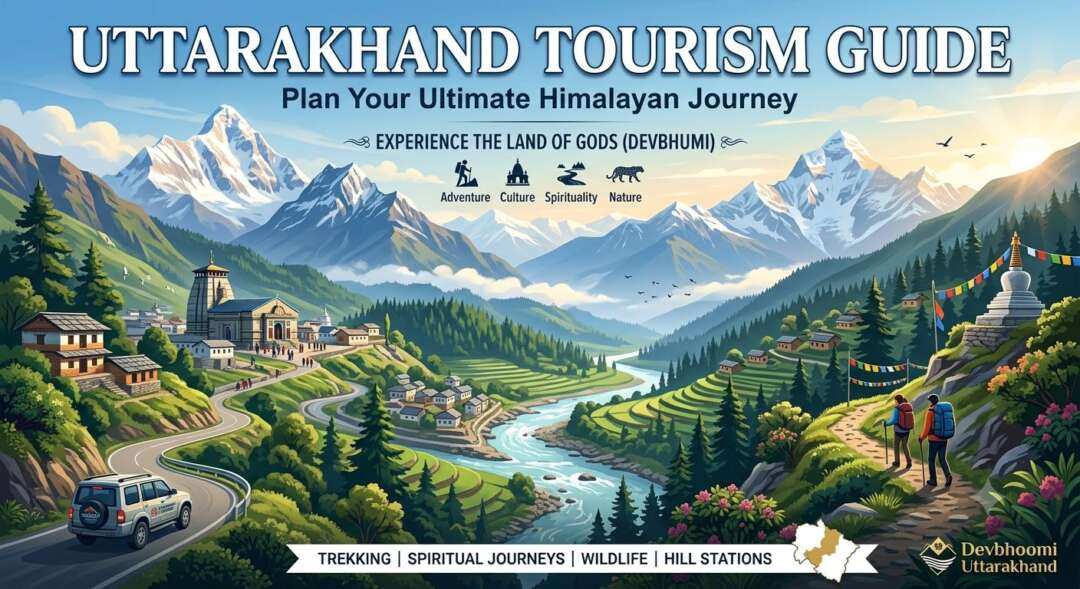
Travelers today often seek more than standard tourist spots; they look for authentic experiences that ground them. Uttarakhand tourism meets this desire by offering a rich mix of spiritual retreats, high-altitude adventure, rare wildlife, and serene mountain getaways. Whether you are an adventure enthusiast navigating white-water rapids in Rishikesh or a family unwinding by Naini Lake, this northern state offers an unforgettable journey into the heart of the Himalayas.
What is Uttarakhand Tourism?
Simple Explanation
At its core, Uttarakhand tourism encompasses travel across the northern Indian state of Uttarakhand, bounded by Tibet to the north and Nepal to the east. The region is geographically divided into two major administrative and cultural zones: Garhwal in the west and Kumaon in the east.
┌─────────────────────────────────────────────────────────────────┐
│                    UTTARAKHAND TOURISM MAP                      │
│                                                                 │
│                 [ T I B E T / C H I N A ]                       │
│                             │                                   │
│            GARHWAL REGION   │   KUMAON REGION                   │
│          ┌──────────────────┴──────────────────┐                │
│          │ • Yamunotri         • Badrinath     │                │
│          │ • Gangotri          • Valley of     │                │
│  [NEPAL]─┤ • Kedarnath           Flowers       │─[NEPAL]        │
│          │ • Rishikesh         • Almora        │                │
│          │ • Mussoorie         • Nainital      │                │
│          └──────────────────┬──────────────────┘                │
│                             │                                   │
│                     [ U T T A R  P R A D E S H ]                │
└─────────────────────────────────────────────────────────────────┘
- Garhwal is famous for sacred rivers, high mountain passes, and historic pilgrimage trails like the Char Dham Yatra.
- Kumaon is known for scenic lake towns, dense oak forests, and expansive views of the Nanda Devi mountain range.
Why It Matters
Travel preferences have shifted toward mindful, sustainable, and wellness-focused journeys. Uttarakhand stands at the intersection of these trends. As the recognized “Yoga Capital of the World,” Rishikesh attracts travelers seeking holistic health and meditation. At the same time, eco-conscious travelers value Uttarakhand’s protected national parks, community-based homestays, and pristine alpine meadows (known locally as Bugyals).
Key Features & Highlights
                        CORE TOURISM PILLARS
┌──────────────────┐    ┌──────────────────┐    ┌──────────────────┐
│   SPIRITUALITY   │    │    ADVENTURE     │    │     WILDLIFE     │
├──────────────────┤    ├──────────────────┤    ├──────────────────┤
│ • Char Dham      │    │ • White Water    │    │ • Royal Bengal   │
│ • Panch Kedar    │    │   Rafting        │    │   Tigers         │
│ • Ganga Aarti    │    │ • Auli Skiing    │    │ • UNESCO World   │
│ • Ashrams        │    │ • Alpine Treks   │    │   Heritage Sites │
└──────────────────┘    └──────────────────┘    └──────────────────┘
1. Sacred Rivers and Pilgrimage Circuits
Uttarakhand gives rise to India’s most revered rivers, including the Ganges and Yamuna.The Char Dham Yatra—visiting Yamunotri, Gangotri, Kedarnath, and Badrinath—remains one of the country’s most important spiritual journeys.Beyond the primary four, circuits like the Panch Kedar (five sacred Shiva temples) and Panch Prayag (five holy river confluences) offer rich avenues for spiritual exploration.
2. High-Altitude Adventure Sports
From the rapids of the Ganges to the snow-covered slopes of Garhwal, Uttarakhand is an adventure hub.Rishikesh offers Grade III and IV white-water rafting, bungee jumping, and zip-lining. Winter sports enthusiasts head to Auli, home to high-altitude ski slopes served by one of Asia’s longest cable cars.
3. Biodiversity and UNESCO World Heritage Sites
Nearly 45% of Uttarakhand’s geography is covered in dense forests.The state houses Jim Corbett National Park, India’s oldest national park, famous for its Royal Bengal Tigers.High in the Himalayas lies the Valley of Flowers National Park, a UNESCO World Heritage Site that blooms with endemic alpine flora every monsoon.
Benefits of Visiting Uttarakhand
Financial Benefits
Compared to international alpine destinations, Uttarakhand offers a high-value Himalayan experience across various budgets:
- Budget Travelers: Well-connected public transit, affordable state-run tourist guest houses (GMVN and KMVN), and local homestays make long stays accessible.
- Luxury Travelers:High-end wellness resorts, boutique heritage properties, and private helicopter services for pilgrimage sites provide premium comfort.
Lifestyle & Health Benefits
Spending time at higher altitudes among pine and deodar forests provides genuine physical and mental refresh. Participating in daily yoga along the Ganges, eating organic local mountain food, and hiking forest trails offer a clear wellness reset.
                     WELLNESS & HEALTH IMPACT
┌──────────────────────────────────────────────────────────────┐
│  PHYSICAL REJUVENATION       │  MENTAL CLARITY               │
├──────────────────────────────┼───────────────────────────────┤
│  • Clean air at high altitudes│  • Digital detox in tranquil  │
│  • Active Himalayan hiking   │    mountain retreats          │
│  • Organic mountain cuisine  │  • Daily meditation & yoga    │
└──────────────────────────────┴───────────────────────────────┘
Long-Term Personal Value
A trip to Uttarakhand often leaves a lasting imprint. Whether conquering a challenging high-altitude pass like Roopkund or experiencing quiet reflection at a remote temple, the state offers meaningful life experiences beyond typical sightseeing.
Location & Regional Analysis
                      REGIONAL SNAPSHOT
┌──────────────────────────────────────────────────────────────┐
│  DEHRADUN & MUSSOORIE        │  RISHIKESH & HARIDWAR         │
│  Capital access, colonial    │  Spiritual core, river access,│
│  charm, family gateways      │  adventure hubs               │
├──────────────────────────────┼───────────────────────────────┤
│  NAINITAL & ALMORA           │  CHAMOLI & RUDRAPRAYAG        │
│  Kumaon lakes, cultural      │  High peaks, major treks,     │
│  heritage, pine forests      │  Char Dham shrines            │
└──────────────────────────────┴───────────────────────────────┘
1. The Garhwal Hub (Dehradun, Mussoorie, Rishikesh, Haridwar)
- Connectivity: Jolly Grant Airport in Dehradun offers daily direct flights to major hubs like Delhi and Mumbai. Broad-gauge railway networks serve Haridwar and Dehradun, while the Delhi-Dehradun Expressway has drastically reduced travel times from the national capital.
- Infrastructure: Excellent roads, quality medical care, and wide-ranging hospitality options make this region the ideal entry point.
2. The Kumaon Circuit (Nainital, Corbett, Ranikhet, Almora, Kausani)
- Connectivity: The primary railway gateway is Kathgodam, supported by flights into Pantnagar Airport.
- Infrastructure Growth: Improved rural roads now easily link quiet mountain villages to main travel corridors, making remote places like Binsar and Munsiyari more accessible without sacrificing their peaceful environment.
3. Remote Frontiers (Pithoragarh, Uttarkashi, Chamoli)
- Future Potential: Infrastructure projects under the Char Dham All-Weather Road initiative and expansion of regional airstrips (like Pithoragarh’s Naini Saini Airport) continue to make high-altitude destinations safer and more accessible year-round.
Investment & Travel Potential
                        TRAVELER PROFILES
┌──────────────────┐    ┌──────────────────┐    ┌──────────────────┐
│   THRILL SEEKER  │    │ SPIRITUAL SEEKER │    │ NATURE LOVER     │
├──────────────────┤    ├──────────────────┤    ├──────────────────┤
│ • Whitewater     │    │ • Char Dham      │    │ • Birdwatching   │
│   rafting        │    │ • Ashram retreats│    │ • Forest stays   │
│ • High-pass treks│    │ • Evening Aarti  │    │ • Photography    │
└──────────────────┘    └──────────────────┘    └──────────────────┘
High ROI Experiences
For travelers investing their vacation time and money, Uttarakhand delivers distinct returns:
- Adventure ROI: World-class rapids and trekking trails at a fraction of the cost of European or South American destinations.
- Spiritual ROI: Direct, accessible immersion in traditional practices, ashram life, and ancient ceremonies.
Challenges to Keep in Mind
- Seasonal Weather: The monsoon season (July through August) brings heavy rainfall, landslips, and road closures.
- High-Altitude Acclimatization:Shrines like Kedarnath sit above 11,500 feet (3,500 meters). Travelers need to pace themselves to avoid acute mountain sickness.
- Peak Season Crowds: Popular destinations such as Mussoorie and Nainital experience high traffic during May, June, and long weekends.
Comparative Analysis: Uttarakhand vs. Himachal Pradesh
While both states share the Indian Himalayas, their core travel experiences differ significantly:
| Feature | Uttarakhand | Himachal Pradesh |
| Primary Appeal | Spiritual pilgrimages, raw adventure, sacred rivers | Café culture, resort escapes, road trips |
| Wildlife Focus | Tigers, Asian Elephants (Corbett/Rajaji) | Snow Leopards, High-Altitude Fauna |
| Trekking Style | Ancient pilgrim routes, alpine meadows (Bugyals) | High-mountain passes, cold-desert terrain |
| Cultural Essence | Devbhumi tradition, Garhwali & Kumaoni heritage | Himalayan Tibetan-influenced culture |
                       STATE COMPARISON
 Uttarakhand                        Himachal Pradesh
 ┌──────────────────────────────┐   ┌──────────────────────────────┐
 │ • Deep Spiritual Focus       │   │ • Resort & Café Culture      │
 │ • Sacred River Confluences   │   │ • Trans-Himalayan Deserts    │
 │ • Low-Altitude Tiger Safaris │   │ • High-Altitude Passes       │
 └──────────────────────────────┘   └──────────────────────────────┘
Step-by-Step Guide: Planning Your Visit
┌─────────────────────────────────────────────────────────────┐
│                   PLANNING TIMELINE                         │
│                                                             │
│  [3 Months Out]     [1 Month Out]      [1 Week Out]         │
│  • Pick region      • Secure permits   • Pack layers        │
│  • Book flights     • Reserve stays    • Check weather      │
└─────────────────────────────────────────────────────────────┘
1.Select Your Ideal Region:Garhwal vs. Kumaon Focus.
Decide between Garhwal (best for pilgrimage, high adventure, and sacred sites) and Kumaon (best for serene lake towns, quiet forest retreats, and wildlife safaris).
2.Determine the Right Season:Timing matters for mountain travel.
- March to June: Ideal for summer escapes, trekking, and sightseeing.
- July to August: Best for the Valley of Flowers; expect heavy monsoon rains elsewhere.
- September to November: Offers clear skies, sharp Himalayan views, and comfortable weather.
- December to February: Excellent for snow sports in Auli and winter stays.
3.Secure Necessary Registrations & Permits:Required for pilgrimages and restricted zones.
Register online through the official state portal if planning the Char Dham Yatra. Obtain required forestry permits in advance for treks within national parks like Nanda Devi or Valley of Flowers.
4.Pack Smart for Mountain Conditions:Prepare for variable weather.
Pack sturdy hiking boots, windproof outer layers, personal medications, power banks, and sufficient cash, as network coverage and ATMs can be limited in higher regions.
Practical Insider Tips
- Travel Mid-Week: Avoid major traffic delays around Nainital, Mussoorie, and Rishikesh by arriving between Tuesday and Thursday.
- Support Local Homestays: Staying in village homestays supports local families directly and offers authentic mountain meals like Ghat ki Dal, Aloo ke Gutke, and Bhang ki Chutney.
- Respect Local Customs: Remove shoes before entering rural village precincts, ask permission before photographing locals, and dress modestly near sacred shrines.
- Carry Cash: While digital UPI payments are widespread in hubs like Dehradun and Rishikesh, cash remains essential in remote Garhwal and Kumaon valleys.
- Acclimatize Correctly: Allow an extra day in middle-elevation towns like Joshimath or Uttarkashi before ascending above 10,000 feet.
                        INSIDER TRAVEL TIPS
┌──────────────────────────────┬──────────────────────────────┐
│  MID-WEEK TRAVEL             │  LOCAL HOMESTAYS             │
│  Avoid weekend traffic jams  │  Enjoy authentic cuisine and │
│  in major hill stations [1.1.2] │  support local families      │
├──────────────────────────────┼──────────────────────────────┤
│  ACCLIMATIZATION             │  CASH PREPARATION            │
│  Take rest days before       │  Carry cash for remote high- │
│  high-altitude climbs [1.1.3]│  altitude villages [1.1.6]   │
└──────────────────────────────┴──────────────────────────────┘
Common Travel Mistakes to Avoid
- Overpacking the Itinerary: Mountain distances take longer to cover than map estimates suggest. A 100 km drive on winding hill roads can take 4 to 5 hours.
- Ignoring Weather Updates: Avoid traveling during peak monsoon alerts when landslips are common. Always check road status updates.
- Trekking Without Guides: Venturing onto high-altitude trails like Kedarkantha or Dayara Bugyal without a local guide risks getting lost when sudden weather changes hit.
- Leaving Plastic Waste Behind: Practice Leave No Trace principles. Carry plastic bottles and wrappers back to major towns for proper disposal.
Future Trends in Mountain Travel (2026–2030)
                       EMERGING TRENDS
┌──────────────────────────────────────────────────────────────┐
│  • ELECTRIC TRANSPORT       │  • EXTENDED WORKATIONS         │
│    Green buses & chargers     High-speed remote mountain     │
│    on main tourist routes     internet hubs                  │
├──────────────────────────────┼───────────────────────────────┤
│  • VILLAGE TOURISM          │  • EXPANDED HELI-NETWORKS      │
│    Restored heritage homes    Safer, faster access to         │
│    preserving mountain culture high Himalayan shrines        │
└──────────────────────────────┴───────────────────────────────┘
- Sustainable & Electric Transit: Uttarakhand continues to expand electric bus networks and EV charging infrastructure along popular routes like the Char Dham corridor and Dehradun-Rishikesh circuit.
- Workations in Remote Hamlets: Fiber-optic Internet access in smaller villages like Chopta, Dhanaulti, and Mukteshwar allows remote workers to blend longer stays with outdoor living.
- Homestay & Heritage Preservation: State-backed incentives encourage locals to restore traditional wooden Koti Banal structures into eco-friendly homestays, preserving traditional architecture while preventing rural migration.
Conclusion
Uttarakhand offers a rare mix of quiet reflection and raw excitement. From the tranquil shores of Naini Lake to the high-energy rapids of the Ganges, and from ancient forest trails to sacred mountain shrines, the state welcomes every visitor with warmth. Plan thoughtfully, respect the mountain environment, and discover why this corner of the Himalayas remains timeless.
Why Choose The Koru Ville?
The Koru Ville offers more than just residential plots—it provides an opportunity to own property in a peaceful destination surrounded by nature. Located near the tourism corridor of Jim Corbett National Park and the scenic Tumariya Dam, the township is ideal for buyers seeking long-term appreciation, a second home, or a tranquil lifestyle.
With gated security, planned infrastructure, and the flexibility to choose between residential plots and cottages, The Koru Ville is designed to meet the needs of both end-users and investors looking to benefit from the continued growth of Uttarakhand’s tourism-driven real estate market.
Frequently Asked Questions
What is the best time to visit Uttarakhand?
March to June is ideal for pleasant weather and clear sightseeing. September to November offers crisp autumn skies and great mountain views. For snow sports, visit Auli between December and February.
How many days are needed for a complete Uttarakhand trip?
A focused trip to one region (like Kumaon or Garhwal) takes 6 to 8 days. A comprehensive tour covering both major circuits or completing the Char Dham Yatra requires 10 to 14 days.
Is Uttarakhand safe for solo travelers and families?
Yes, Uttarakhand is widely recognized as one of India’s safest states for solo travelers, women, and families. Local communities are welcoming, though standard travel precautions apply on remote mountain roads.
What are the top adventure sports in Uttarakhand?
Popular activities include white-water river rafting and bungee jumping in Rishikesh, skiing in Auli, high-altitude trekking across various districts, and paragliding in Bhimtal.
Do I need special permits to visit Uttarakhand?
General tourists do not need permits for major towns like Mussoorie, Nainital, or Rishikesh. However, official permits are required for restricted border zones, specific national parks, and high-altitude treks.

Join The Discussion