
 by
by Imagine standing on the corner of a bustling intersection where the air feels charged with the energy of progress. That is the reality of Sector 63 today. Whether you are a seasoned investor or a business owner looking for a new headquarters, this region has transformed from a mere plot on a map into a powerhouse of economic activity.
For years, people looked at emerging sectors with a skeptical eye, wondering if the promised “boom” would ever arrive. Well, look around—the cranes are moving, the glass facades of corporate hubs are gleaming, and the footfall is real. In this guide, we aren’t just looking at numbers on a spreadsheet; we’re diving deep into the heartbeat of Sector 63. You’ll learn why this specific patch of land has become the “gold standard” for commercial and residential growth, the risks you need to keep an eye on, and a step-by-step roadmap to making your mark here. By the time you finish reading, you won’t just understand the market—you’ll be ready to master it.
What is Sector 63?
Simple Explanation
At its core, Sector 63 is a meticulously planned mixed-use zone designed to bridge the gap between industrial efficiency and modern urban living. Think of it as a “smart hub.” It isn’t just a collection of buildings; it is a self-sustaining ecosystem where corporate offices, retail outlets, and high-end residential complexes coexist. It was birthed from the need for a decentralized business district that offers more space and better technology than the cramped, older city centers.
Why It Matters in 2026+
As we navigate 2026, the definition of a “prime location” has shifted. Proximity to a metro station used to be the only metric. Today, it’s about “Hyper-Connectivity” and “Sustainable Infrastructure.” Sector 63 matters because it was built with the future in mind. With 5G-enabled grids, advanced waste management, and wide arterial roads, it addresses the pain points of the past decade. It has become a magnet for multinational corporations (MNCs) that are fleeing the over-saturated hubs of yesterday in search of modern, scalable office spaces.
Key Features / Highlights
Feature 1: Modern Architectural Standards
The buildings here aren’t just concrete boxes. They are LEED-certified structures with floor-to-ceiling glass, ample natural lighting, and open-plan designs. This aesthetic appeal isn’t just for vanity; it directly impacts the productivity of the businesses operating within them and boosts the resale value for investors.
Feature 2: Robust Power and Digital Grid
In an era where a five-minute internet outage can cost a firm millions, Sector 63 stands out. The sector features a dedicated power substation and redundant fiber-optic pathways. For IT firms and data-driven businesses, this reliability is the ultimate “silent” luxury.
Feature 3: Integrated Green Spaces
Unlike the gray jungles of the 90s, Sector 63 incorporates “breathable” zones. Public parks, green belts along the roads, and vertical gardens in commercial complexes ensure that the air quality remains significantly better than the city average, making it a preferred choice for the health-conscious modern workforce.
Benefits of Sector 63
Financial Benefits
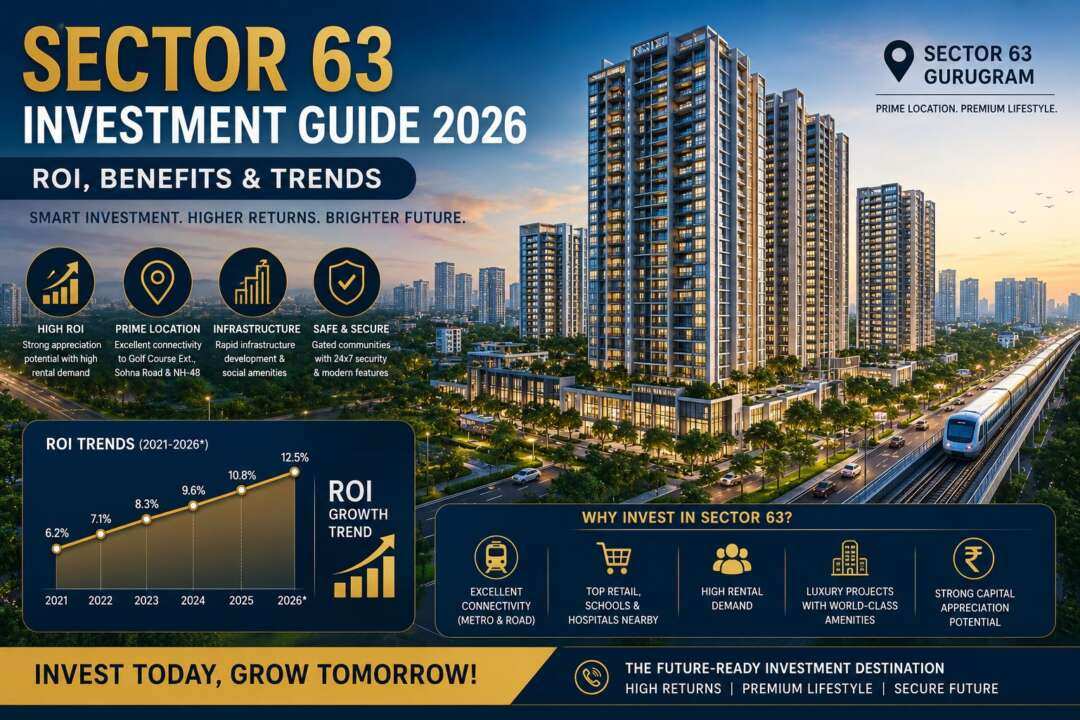
The appreciation rates in Sector 63 have consistently outperformed neighboring sectors by 12–15% annually over the last three years. For those who entered early, the rental yields are equally impressive. Because the demand for Grade-A office space is high but the supply of premium plots is limited, owners enjoy a “landlord’s market” where they can command premium rents and long-term lease commitments.
Lifestyle / Business Benefits
For a business owner, being in Sector 63 means being in the company of giants. The networking opportunities are baked into the geography. For residents, it means a “15-minute lifestyle”—where your office, your child’s school, the hospital, and the luxury mall are all within a short drive or a brisk walk.
Long-Term Value
As more companies move their headquarters here, the ancillary economy—cafes, gyms, dry cleaners, and co-working spaces—is exploding. This creates a cycle of value. The more convenient the sector becomes, the higher the property value climbs. It’s a snowball effect that is far from reaching its peak.
Location / Market Analysis
Connectivity
Sector 63 serves as a gateway. It is strategically positioned near major expressways, providing a direct artery to the international airport and neighboring industrial zones. The recent expansion of the metro line has been the ultimate game-changer, bringing in a daily workforce of thousands without clogging the roads.
Infrastructure Growth
The government’s focus on the “Smart City” initiative has seen Sector 63 receive priority for underground cabling, automated traffic signals, and enhanced street lighting. These aren’t just “nice-to-haves”; they are the pillars of a functional modern city that prevent the decay typically seen in unplanned urban sprawls.
Future Potential
With the upcoming “Tech-Corridor” project slated for completion by late 2027, Sector 63 is expected to see a secondary surge in valuation. This project will link the sector to the newer IT SEZs (Special Economic Zones), making it the central pivot point for the entire region’s commercial activity.
Investment Potential / Use Case
ROI Opportunities
If you are looking for ROI, focus on “Small-Ticket Commercial” units. These are retail shops or office spaces that are affordable for individual investors but yield high rent from startups and local franchises. For those with deeper pockets, purchasing a “Pre-leased” property—where a tenant is already paying rent—offers immediate cash flow from day one.
Risk Factors (Be Honest)
No investment is without risk. In Sector 63, the primary risk is “Execution Delay.” While the demand is high, some developers have struggled with timelines. Furthermore, as the sector becomes more popular, traffic congestion during peak hours is becoming a reality. Always investigate the developer’s track record before signing a check.
Who Should Invest?
- The Retirement Planner: Looking for stable, monthly rental income.
- The Aggressive Entrepreneur: Seeking to own their office space to avoid rising rents.
- The Long-Term Portfolio Builder: Who understands that land in a prime sector is a finite resource.
Comparison Section
Sector 63 vs. The Old Business District
The old district is nostalgic, but it is crumbling. Narrow roads, parking nightmares, and outdated sewage systems make it a headache for modern businesses. Sector 63 offers wide roads, dedicated multi-level parking, and high-speed elevators. It’s the difference between driving a vintage car and a modern electric SUV.
Why It Stands Out
What truly sets Sector 63 apart is its balance. Some sectors are purely industrial (too noisy), while others are purely residential (too quiet/isolated). Sector 63 strikes the perfect middle ground, ensuring that there is activity during the day (offices) and life during the evening (residents and dining).
Step-by-Step Guide to Buying in Sector 63
Step 1: Define Your Objective
Are you buying to sell in 3 years, or are you buying to hold for 20? Your strategy dictates whether you look at an “under-construction” project (for higher capital gains) or a “ready-to-move” unit (for immediate rental income).
Step 2: Verification and Due Diligence
Verify the land titles. Ensure the project is registered with the local regulatory authorities (RERA). Check for “Occupation Certificates” (OC) if the building is finished. Never take a broker’s word as gospel—verify the documents yourself.
Step 3: Financial Planning and Closing
Secure your financing early. Banks are generally eager to lend for properties in Sector 63 because of the high collateral value. Once the price is negotiated, ensure the sale deed is registered promptly to avoid any legal ambiguities.
Expert Tips (The Insider’s Edge)
- Tip 1: Look at the “Corner” Plots. They always have higher visibility and better ventilation, fetching 10% more rent.
- Tip 2: Visit at Night. Check the street lighting and security presence. A safe sector is a profitable sector.
- Tip 3: Follow the Coffee. Look at where major coffee chains are opening. They spend millions on market research; if they are there, the high-spending crowd is coming.
- Tip 4: Check the Parking-to-Area Ratio. In Sector 63, parking is gold. A unit with two dedicated spots is worth far more than one with none.
- Tip 5: Negotiate the “Maintenance” Clause. Ensure you aren’t stuck with exorbitant monthly fees that eat into your ROI.
Common Mistakes to Avoid
Many investors fall into the trap of buying the cheapest property available. In real estate, cheap often means a legal dispute or poor construction quality. Another mistake is ignoring the “Loading Factor”—ensure you know exactly how much “Carpet Area” (usable space) you are getting versus the “Super Built-up Area” you are paying for. Lastly, don’t ignore the maintenance of the common areas; a dirty lobby devalues your office instantly.
Future Trends (2026–2030)
By 2030, Sector 63 will likely transition into a “Zero-Emission Zone,” with more pedestrian-only walkways and electric vehicle (EV) charging stations at every corner. We predict that the residential demand will actually outpace commercial demand as people seek to live closer to these modern workplaces. This “Work-Live-Play” model will be the dominant trend, making 2-BHK and 3-BHK apartments in the sector highly sought after.
Conclusion
Sector 63 is no longer a “future” prospect; it is a “present” reality. It represents the evolution of urban planning, where convenience meets commerce. For the investor, it offers a rare combination of security and growth. For the business owner, it offers a prestigious address and an efficient environment.
The window of “affordable” entry is closing as the sector nears full occupancy. If you’ve been waiting for a sign to diversify your portfolio or move your business to a place that reflects your ambition, this is it. Don’t just watch the skyline change—own a piece of it.
Ready to explore the best deals in Sector 63? Contact a local consultant today and take the first step toward a high-yield future.
The real estate market in 2026 shows that the studio apartment in Noida is not just a passing trend but a permanent fixture in the city’s housing landscape. By focusing on prime sectors and reputable developers, you can secure a studio apartment in Noida that provides both comfort and significant financial returns. Take the leap today and explore the diverse range of options available—your perfect studio apartment in Noida is waiting to be discovered.


Join The Discussion