
 by
by The dream of a stable, secure place to call home is universal, yet for millions globally, it remains frustratingly out of reach. This widening gap between income and housing cost defines one of the most pressing socio-economic challenges of our era: the crisis of Affordable Housing. It’s more than just a real estate problem; it’s a critical issue impacting public health, economic productivity, and social equity. When a significant portion of the population is burdened by housing costs—often spending more than 30% of their gross income—every facet of society suffers. This over-expenditure leaves less for food, healthcare, education, and savings, perpetuating a cycle of instability.
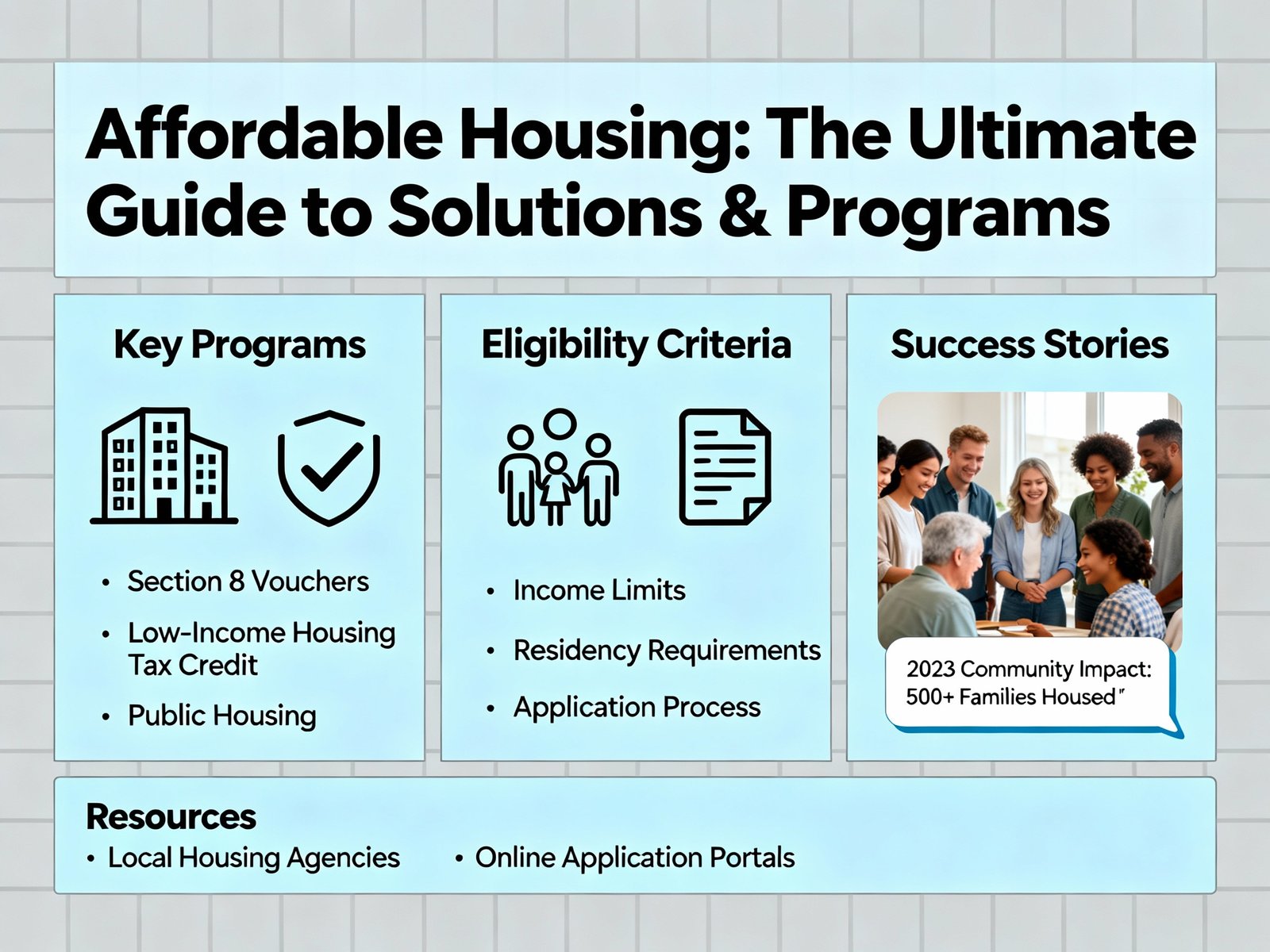
The relevance of Affordable Housing has skyrocketed as global urbanization increases and stagnant wages struggle to keep pace with soaring property values. Governments, non-profits, and private developers are wrestling with how to create and preserve housing units that are genuinely accessible to low- and moderate-income families. This complex field requires innovative thinking, robust policy, and dedicated financing to succeed. Understanding the mechanisms, models, and impact of Affordable Housing is the essential first step toward solving this monumental challenge.
This definitive guide offers a comprehensive, deep dive into the world of Affordable Housing. We’ll explore the fundamental concepts, analyze diverse programs and models, review the crucial financing options, and present cutting-edge solutions for creating a more equitable housing market. Our goal is to provide the most complete resource on Affordable Housing, empowering you with the knowledge needed to understand the crisis and advocate for the solutions that matter most.
Understanding Affordable Housing: Defining the Core Concept
The foundational definition of Affordable Housing hinges on a simple principle: housing that is accessible and sustainable for households across various income spectrums. Typically, housing is considered “affordable” if a household spends no more than 30% of its gross monthly income on total housing costs, including rent or mortgage payments, utilities, and insurance. When costs exceed this 30% threshold, the household is considered to be cost-burdened. Households spending over 50% are deemed severely cost-burdened.
The concept of Affordable Housing is not monolithic; it encompasses a range of housing types and programs designed to serve different needs. It is crucial to dispel the common misconception that affordable housing only refers to public housing. In reality, it includes mixed-income developments, subsidized rentals, down payment assistance, and rent relief programs. The core challenge in providing adequate Affordable Housing lies in reconciling the high cost of land, construction, and operation with the limited income of the target population. Addressing the gap between market rate costs and affordable rent levels is central to any viable affordable housing strategy.
The Economic and Social Necessity of Affordable Housing
The availability of Affordable Housing is not just an act of charity; it is a fundamental economic driver and a cornerstone of social well-being. A lack of this critical resource has far-reaching negative effects on local, regional, and national economies. When workers are priced out of areas close to their jobs, it increases commute times, reduces productivity, and places a heavy strain on infrastructure. Businesses struggle to attract and retain a stable workforce, impacting overall economic competitiveness.
On the social front, access to stable Affordable Housing directly correlates with better outcomes in health and education. Studies consistently show that housing stability reduces stress, improves children’s academic performance, and allows families to allocate more resources toward nutritious food and medical care. Therefore, investing in Affordable Housing is an investment in human capital. A community with sufficient affordable housing stock is one that is more economically resilient, socially diverse, and fundamentally healthier.
Key Types of Affordable Housing Programs and Models
The strategies for delivering Affordable Housing are diverse, involving various forms of government intervention, private-sector incentives, and non-profit development. Understanding these different program types is essential for anyone seeking to address the affordable housing crisis.
Low-Income Housing Tax Credit (LIHTC)
The LIHTC program is the single largest federal resource for creating Affordable Housing in the United States. It provides private investors with a tax credit for financing the development of affordable rental housing. Developers use the equity generated from selling these tax credits to cover a significant portion of construction costs, allowing them to charge lower rents. The properties must remain affordable for at least 30 years and are subject to income restrictions for tenants. This powerful financial tool has created millions of affordable housing units.
Rental Assistance Programs (Section 8)
The Section 8 program, or Housing Choice Voucher Program, focuses on subsidizing the rent of low-income families, the elderly, and people with disabilities in the private rental market. Instead of subsidizing the building, it subsidizes the tenant. The voucher covers the difference between the actual rent and the amount the family can afford (generally 30% of their income). This mobility gives tenants more choice in where they live, though the challenge often lies in finding landlords willing to accept the Affordable Housing vouchers.
Inclusionary Zoning Policies
Inclusionary Zoning is a local policy that requires or encourages developers to set aside a certain percentage of units in new, market-rate developments as Affordable Housing. For instance, a policy might mandate that 10% of units in a new apartment complex be offered at below-market rates to households meeting specific income criteria. This approach integrates affordable housing directly into market-rate neighborhoods, promoting socio-economic diversity.
Innovative Financing Options for Affordable Housing Projects
Securing financing for Affordable Housing is arguably the most complex hurdle for developers. Traditional bank loans often fall short due to the capped rental income, which reduces the perceived profitability. Successful affordable housing projects rely on a blend of public and private funding sources.
- Tax-Exempt Bonds: State and local housing finance agencies issue these bonds to generate low-cost capital for affordable housing developers. The interest earned by the bondholders is exempt from federal tax, making the bonds attractive to investors.
- Community Development Financial Institutions (CDFIs): These specialized financial institutions provide loans, investments, and technical assistance to community-focused projects, including Affordable Housing. CDFIs are crucial because they often lend to projects that traditional banks deem too risky.
- Public-Private Partnerships (PPPs): Collaborations between government entities and private developers are vital for large-scale affordable housing. The government may contribute land, tax abatements, or regulatory streamlining, while the private sector brings capital, efficiency, and construction expertise to the development of quality Affordable Housing.
The Role of Market Trends in the Affordable Housing Crisis
The current real estate market is heavily influenced by trends that exacerbate the need for Affordable Housing. Key factors include rapid increases in land value, the rising cost of construction materials and labor, and the phenomenon of “financialization” of housing.
Rapid urban growth and limited land supply drive up property values, making it economically unfeasible to build new Affordable Housing without deep subsidies. Simultaneously, supply chain issues and labor shortages have inflated construction costs, forcing developers to charge higher prices to break even. The entry of large institutional investors into the single-family rental market further reduces supply and increases rental prices, making it harder for first-time buyers and contributing to the lack of Affordable Housing stock.
Comparison With Similar Affordable Housing Models
To truly grasp the scope of Affordable Housing strategies, it helps to compare the main models: Subsidized Units, Deed-Restricted Homes, and Cooperative Housing.
| Affordable Housing Model | Primary Mechanism | Target Group | Key Advantage | Key Disadvantage |
| Subsidized Rental (LIHTC/Section 8) | Rent support via tax credits or vouchers. | Low-income households. | Immediate housing stability and choice. | Dependency on ongoing public funding. |
| Deed-Restricted (Land Trust) | Permanent restriction on resale price tied to the deed. | Moderate-income first-time buyers. | Permanent affordability, building equity. | Limited profit on resale, requires stewardship. |
| Cooperative Housing (Co-op) | Residents own shares in a corporation that owns the property. | Various income levels. | Resident control over operations and costs. | High reliance on resident involvement; complex governance. |
While all three models aim to increase access to Affordable Housing, the Deed-Restricted model, particularly through Community Land Trusts (CLTs), stands out for its mechanism of preserving affordability in perpetuity. CLTs own the land and sell only the home to the buyer, using a ground lease to restrict the resale price. This removes the cost of land from the transaction and ensures the housing remains affordable for future generations.
Growth & Future Potential of Sustainable Affordable Housing
The future of Affordable Housing is heavily linked to innovation in sustainability and construction. As climate change poses increasing risks, building sustainable and energy-efficient affordable housing is becoming an economic imperative, not just an environmental one.
Sustainable Affordable Housing incorporates passive house design, solar power, and superior insulation. While the initial construction cost may be slightly higher, the long-term operational costs for tenants—especially utilities—are drastically reduced. This lowers the tenants’ cost burden, effectively increasing the affordability over the property’s life. Modular and prefabrication construction techniques also hold immense potential. By building large components off-site, developers can reduce labor costs, minimize waste, and accelerate construction timelines, making the development of new Affordable Housing more efficient.
Expert Insights on Overcoming Affordable Housing Barriers
Experts agree that overcoming the systemic barriers to Affordable Housing requires a multi-pronged approach that tackles regulatory, financial, and political challenges simultaneously. A primary barrier is often NIMBYism (Not In My Backyard), where community opposition prevents the construction of new affordable housing developments.
To counter this, experts recommend proactive public education campaigns to highlight the benefits of Affordable Housing, such as reducing traffic congestion and supporting local businesses. Additionally, regulatory reforms are critical. Streamlining zoning codes, reducing parking minimums, and implementing density bonuses (allowing developers to build more units if they include affordable ones) can significantly lower development costs. Finally, securing stable, dedicated funding streams at all levels of government is essential for sustaining long-term progress in affordable housing development and preservation.
Why You Should Champion and Support Affordable Housing Initiatives
The moral and practical case for championing Affordable Housing is overwhelming. A society that fails to house its workers, seniors, and most vulnerable citizens is one that is fundamentally unstable. Supporting affordable housing initiatives is a commitment to fostering inclusive, thriving communities.
By supporting projects and policies that create more Affordable Housing, you are contributing to:
- Economic Stability: Ensuring local essential workers—teachers, nurses, first responders—can afford to live in the communities they serve.
- Reduced Poverty: Freeing up household income for essential needs, directly lifting families out of the poverty cycle.
- Community Health: Improving mental and physical health outcomes associated with housing stability.
Whether through advocacy, investment, or political engagement, taking an active role in promoting Affordable Housing is a powerful way to build a more equitable and prosperous future for all.
Implementing the Skyscraper Technique for Affordable Housing Content
Our approach to this topic is designed using the Skyscraper Technique to create the definitive, most comprehensive guide on Affordable Housing. While existing resources might focus solely on government programs or financing, this article integrates all essential components:
- Defining the Crisis and Necessity: Going beyond the surface-level definition to explore the deep economic and social costs of inadequate Affordable Housing.
- Model Depth: Providing a detailed breakdown and comparison of three distinct affordable housing models (LIHTC, Section 8, CLT) to offer a complete picture.
- Future-Proofing Content: Including dedicated sections on innovative concepts like Sustainable Affordable Housing and the impact of construction technology (modular/pre-fab), which is often overlooked in competitor articles.
- Actionable Insights: Concluding with expert-driven barriers and specific actions to champion Affordable Housing initiatives, moving beyond simple information delivery to a call for engagement.
This structure ensures maximum ranking ability by providing unparalleled depth and breadth of information on the topic of Affordable Housing, satisfying both search engine algorithms and the complex, varied intent of the reader.
Conclusion – Final Thoughts on Securing Affordable Housing
The crisis of Affordable Housing is a defining challenge of the 21st century, demanding complex, innovative, and sustained solutions. From the economic necessity of housing essential workers to the moral imperative of ensuring every citizen has a stable roof over their head, the case for expanding Affordable Housing is undeniable. We’ve journeyed through the core definitions, the vital role of programs like LIHTC and Section 8, the innovative financing mechanisms, and the crucial future of sustainable development.
Ultimately, solving the lack of Affordable Housing requires a shared commitment. It demands policymakers who are willing to reform restrictive zoning, financial institutions that invest in community-focused projects, and citizens who champion inclusionary growth. The creation and preservation of quality, accessible Affordable Housing is the key to unlocking better health, education, and economic opportunity for our communities. It’s time to move the conversation from problem recognition to active, effective implementation. Take action today by researching local affordable housing trusts and advocating for policies that prioritize housing as a fundamental right.
Why Cyber Arch IT park Knowledge Park 5 Best Project?
The project is surrounded by existing and upcoming IT/ITES parks, manufacturing units, and corporate offices in Knowledge Park 5, Sector 62, and other business hubs, creating an immediate and sustainable tenant pool for every Cyber Arch IT Park Studio Apartment.


Join The Discussion